וְהַכֶּ֖סֶף

v’hakesef · and the money

A feast is made for laughter, and wine makes life merry,
but money is the answer for everything.

Ecclesiastes 10:19

Ōsaka, 1697 — the first futures market

They ran it on four numbers, written by candlelight. We never needed a fifth.

Open, high, low, close. Everything since is decoration. Dōjima runs one geometric method across Indian options and crypto — and publishes every day it lost, because the losing days are the only part you cannot fake.

Scroll
The position

Every platform in this category will show you a backtest.

Not one of them will show you the losing years. So the rising curve has stopped carrying information — and the only credible move left is to publish what everyone else deletes.

₹0
Monday, net
Across 143 trades, the one weekday that loses money. We publish it and we still trade it.
₹0
Deepest drawdown
Peak-to-trough on the combined book. If you cannot hold this, do not fund it.
0
Longest losing run
Ten consecutive losses over nine calendar days. It happened. It will happen again.
0
Months that lost
Fifty were green. The other eighteen are in the ledger with the same font size.
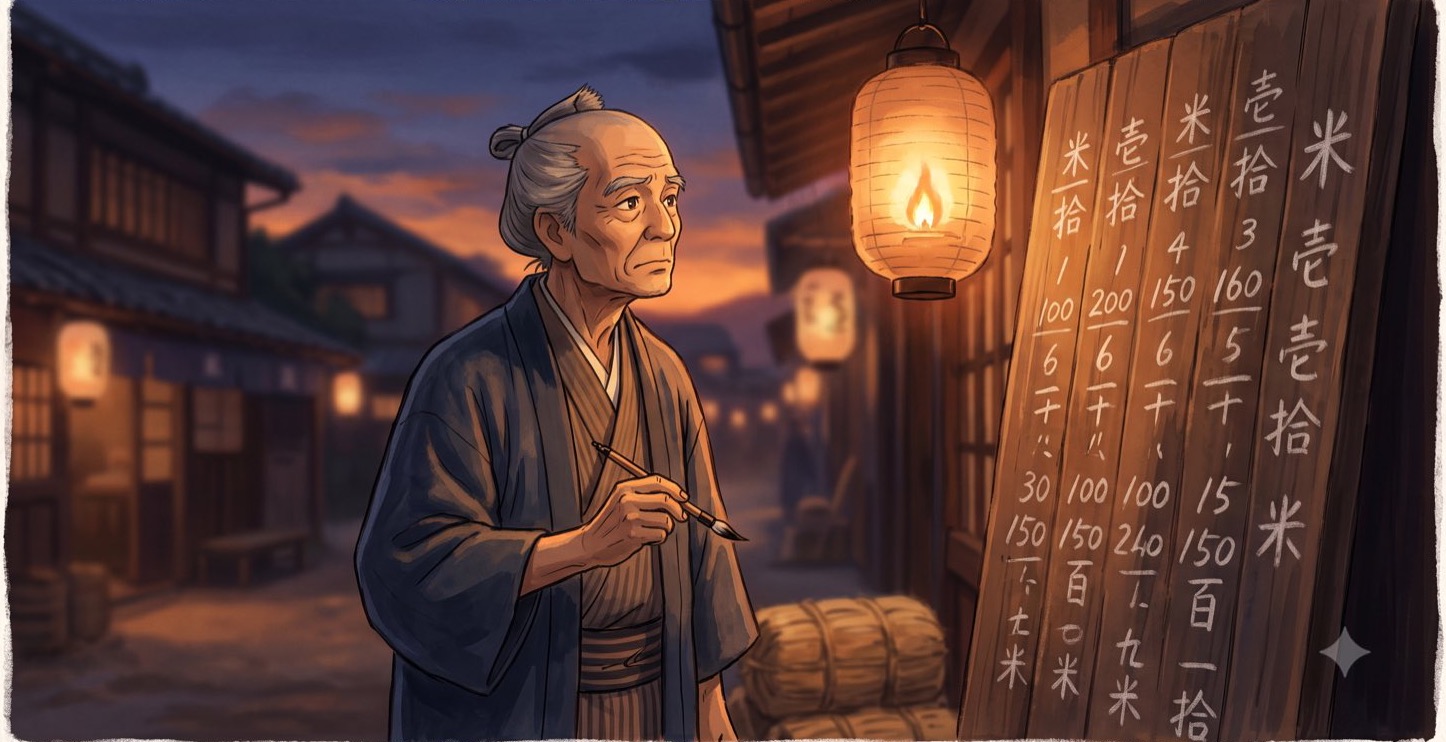
A rice merchant reading the day's board at the Dōjima exchange
Plate II — The merchantŌsaka · c. 1730
Act I — Structure

A price is not a number. It is a shape with a memory.

The rice merchants were not forecasting. They were reading structure — where the last serious fall began, where buyers had defended before, how far a move had retraced against itself.

Dōjima encodes exactly that and nothing more. A prior swing becomes an anchor. The anchor projects a ladder. Price either respects the ladder or it does not, and the engine cares about no other question. There is no sentiment model, no news feed, no prediction of tomorrow.

Four inputs, one geometry, two markets. The same code path prices a NIFTY option and a Binance ladder.


Hands chalking the day's prices onto a ledger board beside a lit candle
open high low ¥480
Plate III — The ledgerChalk, board, candle
Act II — Discipline

The rules were written before the trade, or they were not rules.

Every parameter is committed to a file before the session opens: entry trigger, stop distance, target, the exact minute an unresolved position is closed. The engine cannot be argued with at 14:50 because there is nobody there to argue.

Entries are taken on the first second after a signal candle closes — not on the candle that is still forming. That one distinction is the difference between a backtest and a fantasy, and it is enforced in the same function for paper and live.

Watch the last figure on the board. That is a live NIFTY print, chalked onto the same four columns Ōsaka used.

A single candlestick emerging from the historical plate
Plate IV — The candleUnchanged in 328 years
Act III — Continuity

The instrument you use today was invented to trade rice.

Munehisa Homma's candle survived three centuries, four industrial revolutions and the entire history of computing without a single change to its shape. Nothing else on your screen can say that.

We did not modernise it. We automated the reading of it, then spent five years proving the reading holds on real fills, at real lot sizes, net of every charge the exchange and the government actually levy.

The ledger

Five years. 891 trading days. Nothing removed.

Every trade below was re-priced against real Upstox option premiums, at the lot size actually in force on that expiry, net of brokerage, STT, exchange fees, GST, SEBI turnover and stamp duty.

Cumulative net P&L · Jan 2021 → Aug 2026
₹0
Cumulative net Winning day Losing day
Nothing here is smoothed. The first 46 months earned ₹3,81,178 across 634 trades — ₹601 a trade. The last 21 months earned ₹7,79,393 across 301 — ₹2,589 a trade. Two thirds of the result came from the final third of the book. Anyone who shows you only the stretch after the marked line is selling you a regime, not a method.
₹0
Net, after every charge
₹13,29,567 gross less ₹1,68,996 in charges. Itemised in the tearsheet.
0
Trades
51.0% won. The edge is size, not frequency of being right.
0
Profit factor
₹1.39 returned for every ₹1.00 risked and lost.
0
Return over drawdown
Net profit measured against the worst hole it ever dug.
What it costs to run
CHARGES, IN FULL

Flat ₹80 brokerage is 44% of all charges and does not scale with size — which is precisely why small accounts are the ones that get quietly eaten.

Turnover traded₹10.33 cr
Total charges₹1,68,996
Charges / turnover0.164%
Per trade₹181
What it costs to fund
CAPITAL, AT EACH SIZE

Fund peak premium outstanding, plus the deepest drawdown, plus 30% headroom. One lot is the floor — below it, the flat fee wins.

1 lot — the minimum₹1,02,968 · 39%/yr
4 lots — as deployed₹3,76,895 · 55%/yr
Charges eaten, 1 lot33% of gross
Charges eaten, 4 lots13% of gross
Three ways in

The same evidence answers three different questions.

Traders

Run the signal on your own keys.

The geometry ships to you. Your API keys never leave your machine — the executor runs locally and we could not place your orders if we wanted to.

  • Signals delivered live, with the anchor and ladder that produced them
  • Local executor, one install, your broker, your custody
  • Every published signal timestamped before its outcome is known
Buyers

License the method, not a black box.

You receive the rule set in full — anchors, ladder spacing, stop logic, exit clock — because a method you cannot inspect is a method you cannot size.

  • Complete parameter file, versioned, with the date each rule was frozen
  • Five-year tearsheet: monthly, yearly, daily, weekday, charge-by-charge
  • Slippage break-even published against the modelled assumption
Investors

Diligence that starts with the drawdown.

Most decks open with the return. This one opens with the hole, the flat years and the single trade that carries the tail.

  • Regime split disclosed: 67% of profit from 32% of trades
  • Tail concentration named: best and worst ten days are 27% of the result
  • Raw trade log available for independent re-pricing
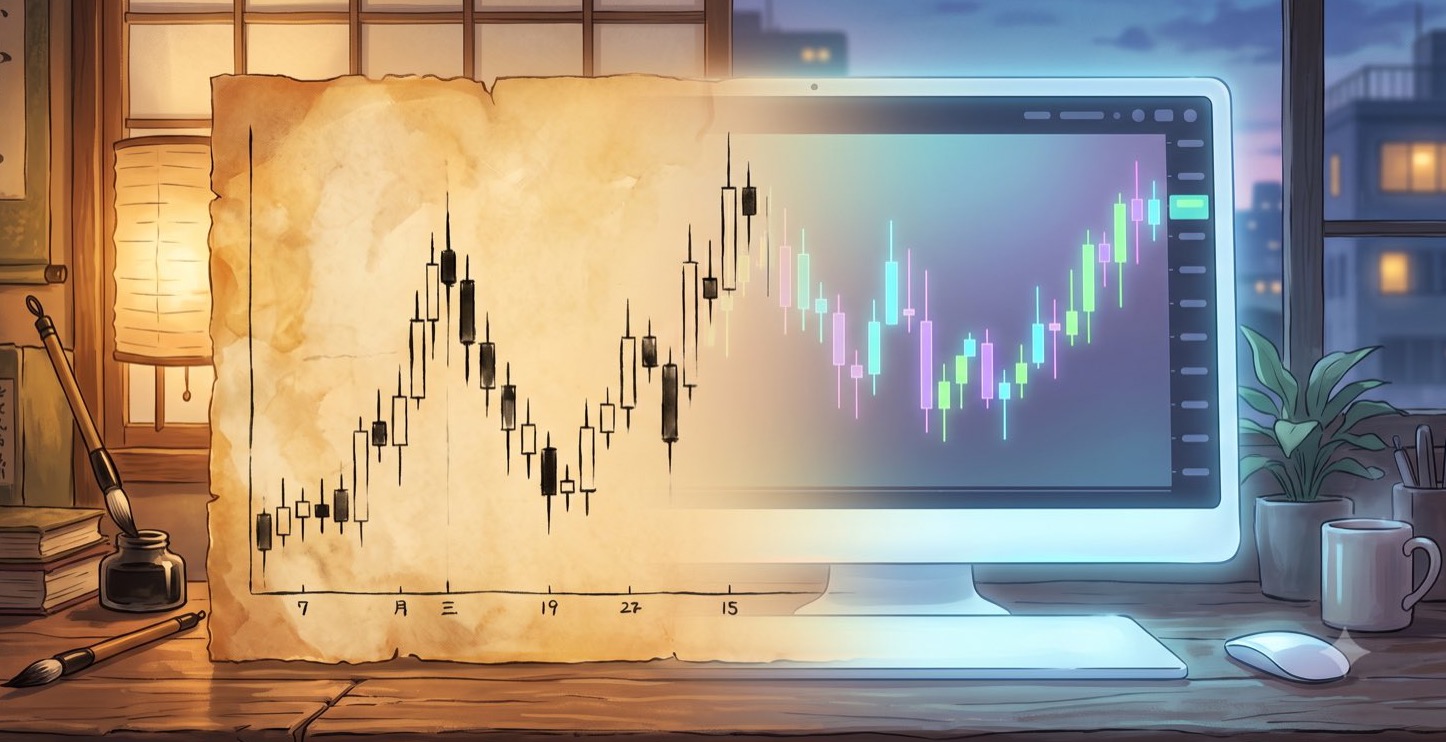
A paper price chart dissolving into a modern trading monitor
Plate V — The bridgePaper to screen
One method, two markets

Rice, then index options, then crypto. The reading never changed.

Structure does not know what it is drawn on. The engine that ladders a NIFTY option is the engine that ladders a Binance pair — the same anchors, the same geometry, different clocks and different fees.

The crypto book is deliberately small and its record is short. We will not dress a young book in the older one's numbers.

Access

We would rather you left than sized this wrong.

Access is granted after a conversation, not after a card is charged. The last question below is the one that decides it.

If your drawdown answer is smaller than −₹1,28,429, we will tell you to trade one lot or not at all. That conversation is free and it is the whole point of asking.